The plum blossoms bloom, the arrival of spring in Japan.
The twenty-four solar terms divide the four seasons of spring, summer, autumn, and winter into six additional seasonal periods.
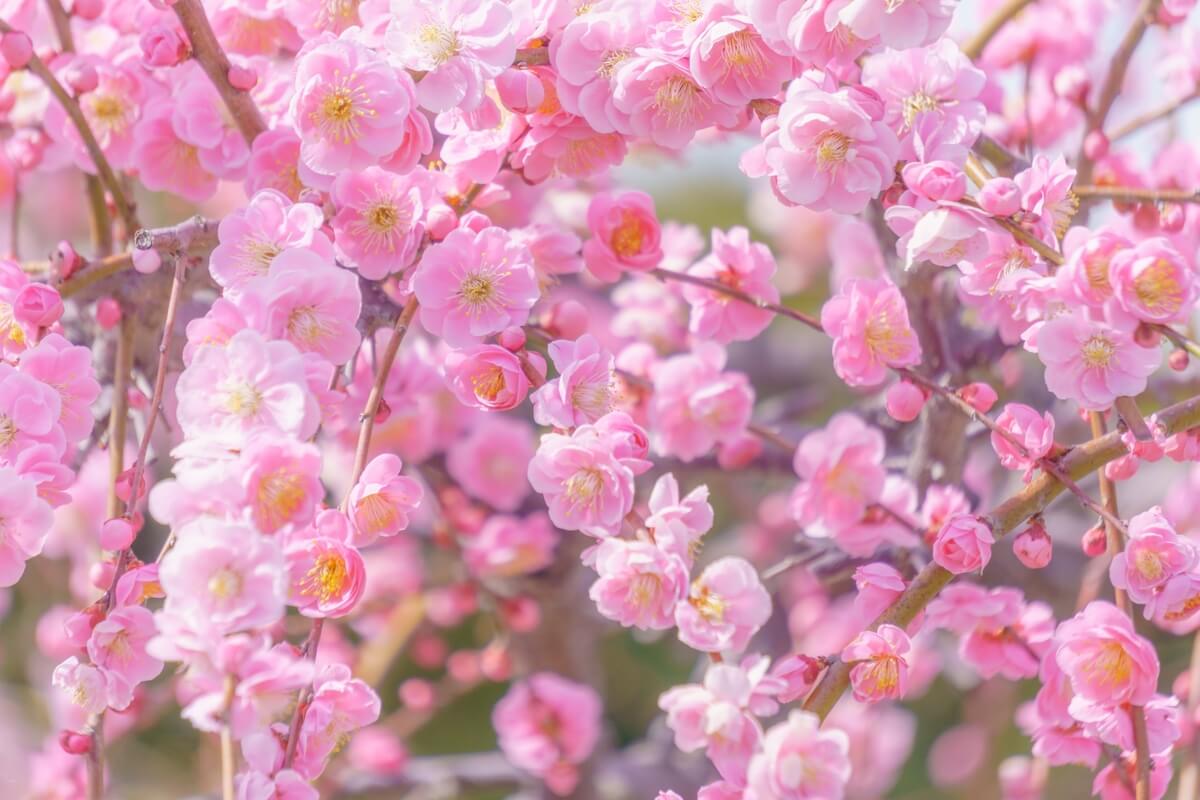
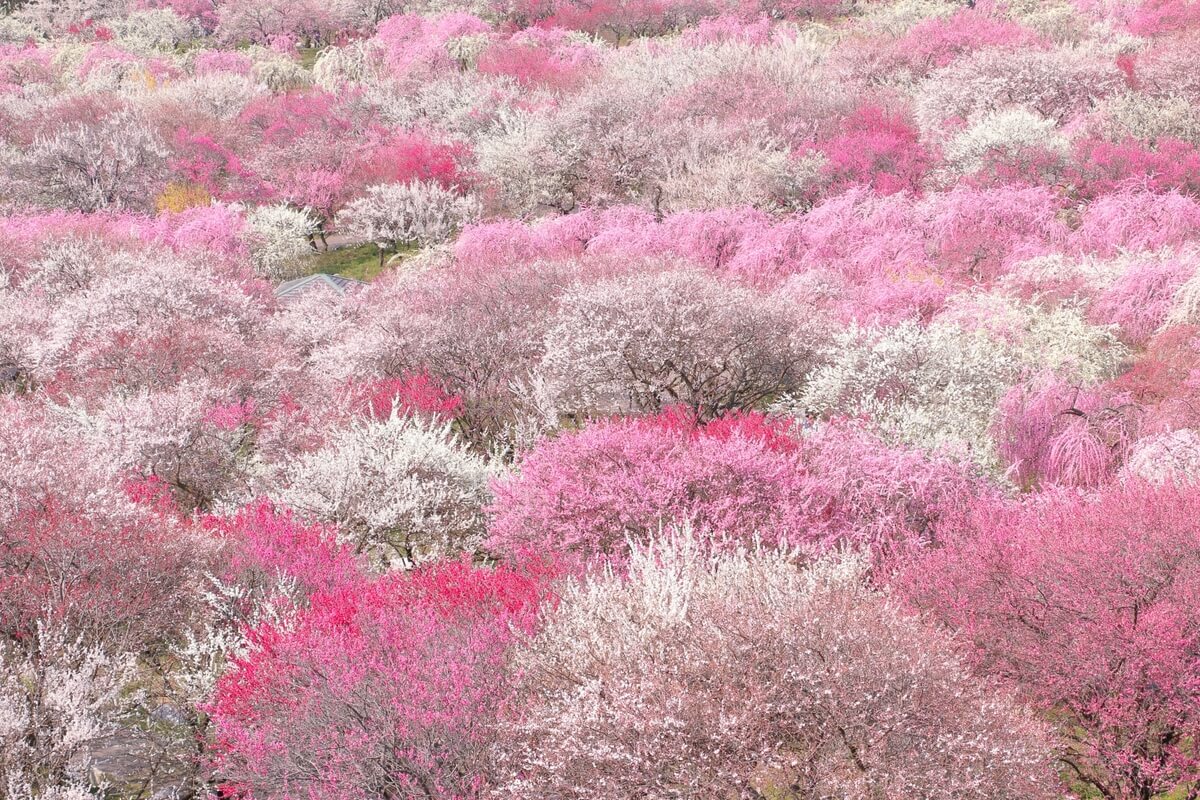
The plum blossom, also known as the “Harutsugegusa (herb that heralds spring),” began blooming between the “Great Cold” (this year on January 20th) and the “Beginning of Spring” (February 3rd). The buds burst open all at once, and the peak viewing period will soon arrive.
The haiku composed by Matsuo Bashō’s disciple, Hattori Ransetsu
—“One plum blossom / and the warmth / of each one”— perfectly captures this seasonal feeling.
Japanese haiku are apparently booming overseas too; I hear it’s a short poetic form expressed in three lines.
By the way, the cherry blossom is Japan’s representative flower. Even in the world of haiku mentioned earlier, simply writing “flower” implies a cherry blossom. And when we talk about flower viewing, it’s definitely the cherry blossoms.
But this hasn’t always been the case. In the Nara period, flower viewing apparently referred to plum blossoms.
The plum blossom was brought back from China by the Envoys to Tang China (students sent to Tang China, then an advanced nation in economics, culture, and scholarship) and was treasured as a rare flower. It was planted in gardens, and nobles enjoyed viewing its blossoms. Unlike the plum, the cherry blossom is a native species that has existed in Japan’s mountains and fields since ancient times, but back then, only mountain cherry trees and the Edo-higan cherry tree existed.
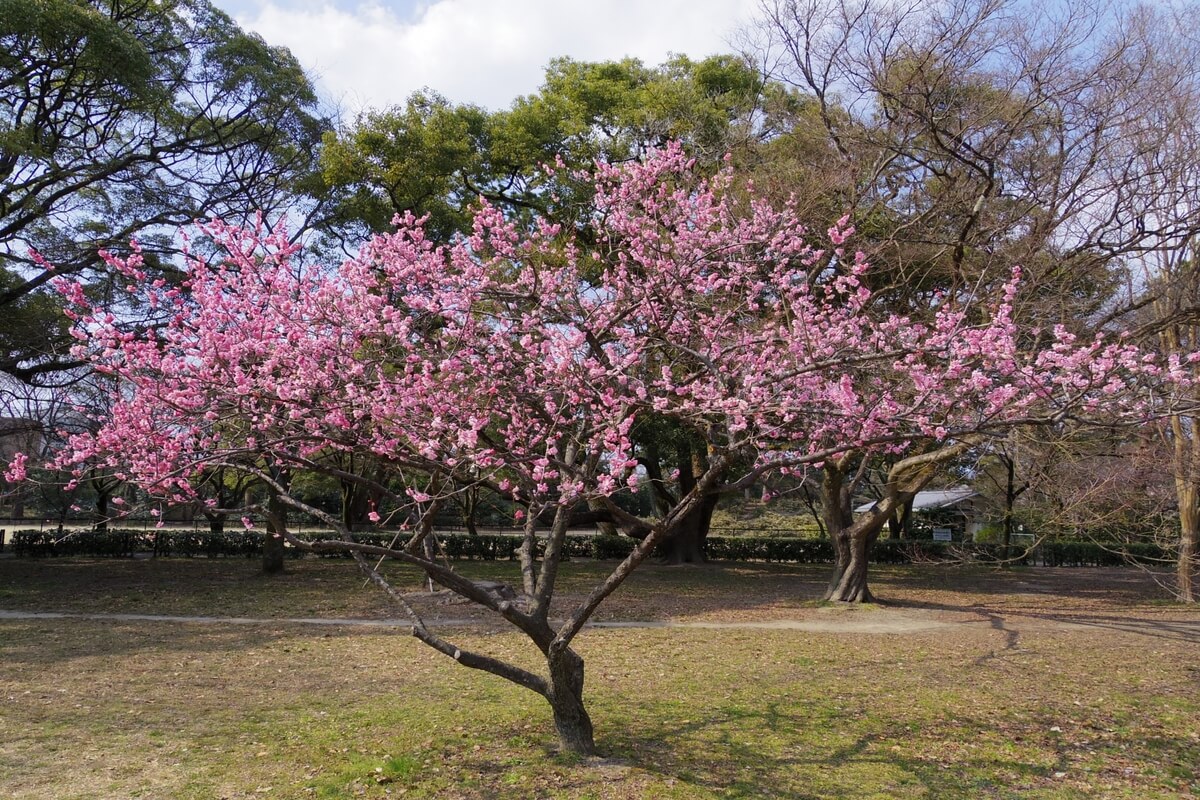
The Manyoshu, compiled during the Nara period, features plum blossoms in about 120 poems, compared to just over 40 poems about cherry blossoms, showing how highly cherished they were.
Planted before the Shishinden Hall of the Kyoto Imperial Palace, which was the Emperor’s residence, they were said to be “Ukon no Tachibana, Sakon no Ume” in the early Heian period (now tangerine on the right, plum on the left).
Regarding plum blossoms, the famous lament and homesick song by Sugawara no Michizane, a supreme Heian-period elite exiled to Dazaifu in Fukuoka due to the Fujiwara clan’s conspiracy, is also well-known.
—“When the east wind blows, let your blossoms fragrance, plum trees. Do not forget the spring, even if I am not here.”—
Gradually, these were replaced by cherry blossoms, and by the Edo period, with the development and spread of the Somei-Yoshino variety, “flower viewing became synonymous with cherry blossoms.”
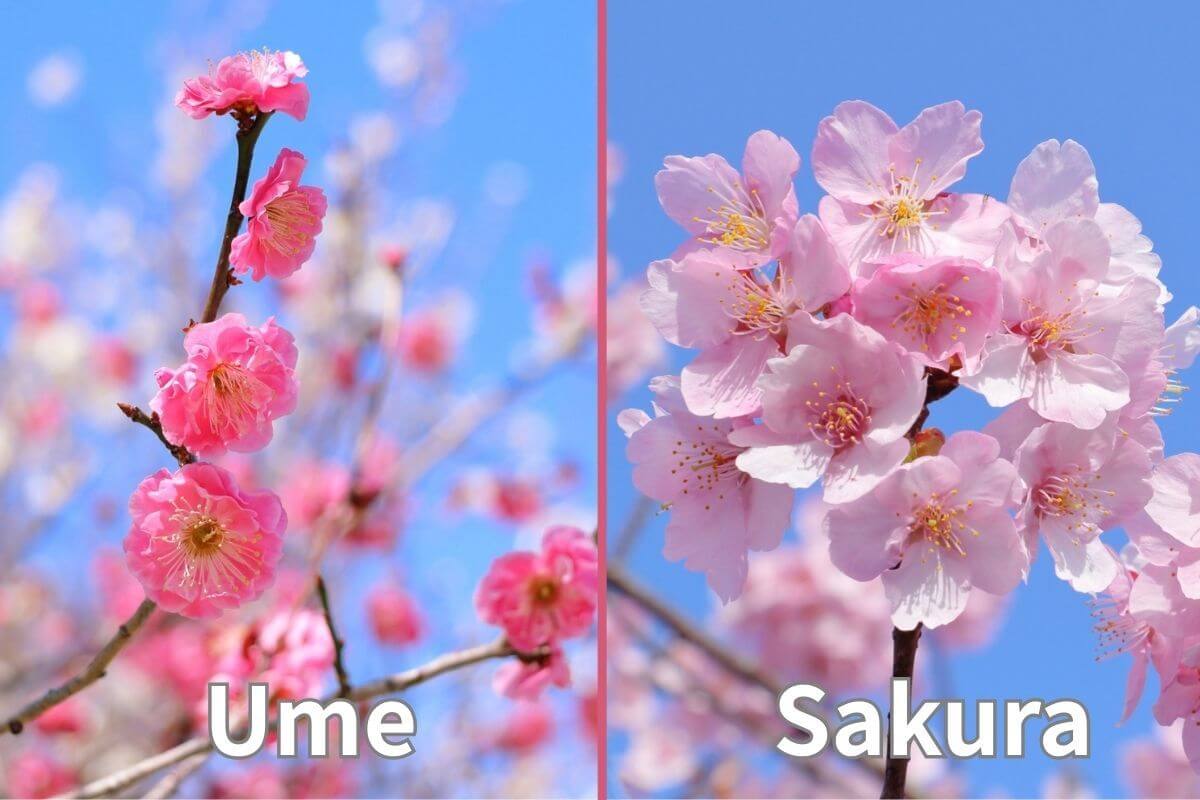
Unlike cherry trees, which grow quickly and spread their roots, plum trees can be planted near houses. Cherry trees can damage house foundations and water pipes, and attract insects, so the saying goes, “Don’t plant them near dwellings.” Conversely, planting them along riverbanks strengthens the embankments and allows for enjoyable flower viewing.
There’s also the saying, “Fools prune cherry trees, fools don’t prune plum trees,” as plums actually thrive with pruning. This makes them popular for bonsai, known as “bonbai.” Currently, Nagahama City in Shiga Prefecture hosts the nationally renowned “Bonbai Exhibition.”
https://bonbai.jp/catalog/
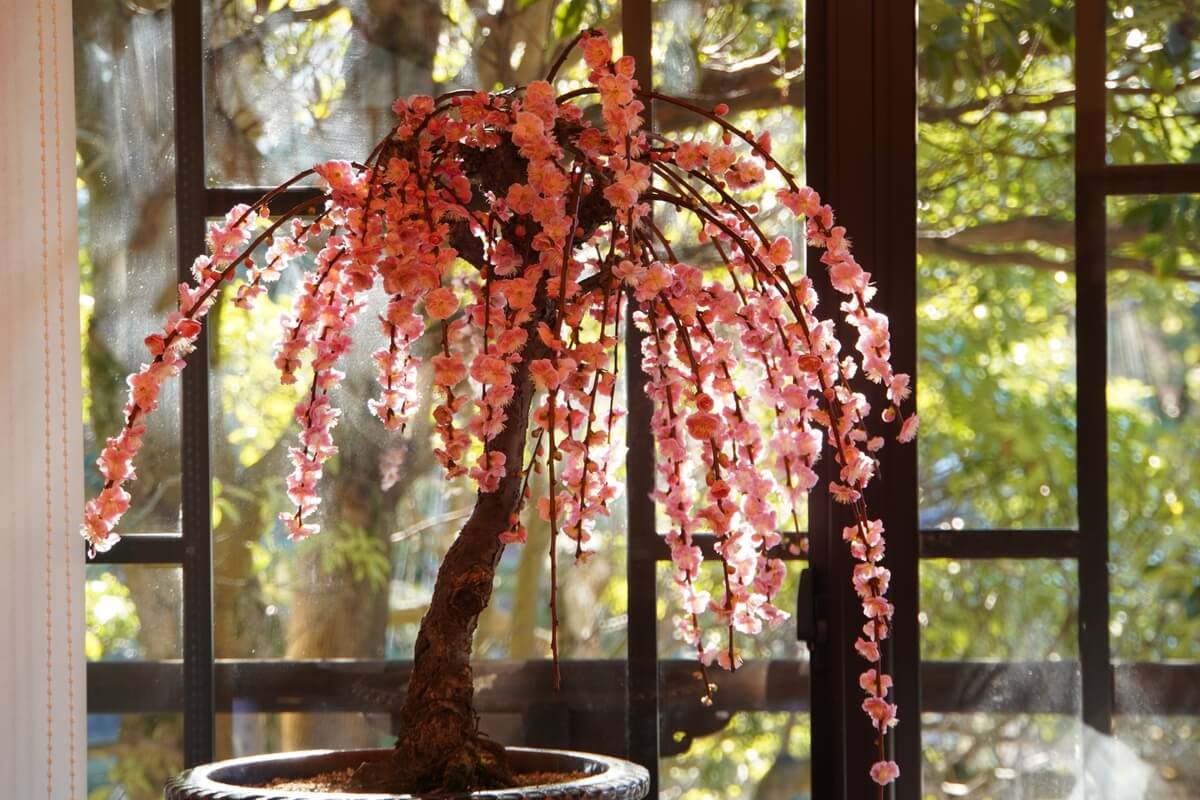
Plum blossoms are cherished for their fragrance and fruit, while cherry blossoms are admired for their fleeting beauty and graceful surrender to the bustling crowds.
Which do you prefer?
By the way, in early February 2026, the season’s strongest cold snap arrived, blanketing the red plum tree in my garden with white snow. The vivid pink blossoms against the pure white snow create a breathtaking scene—one you might be lucky enough to witness at this time of year.
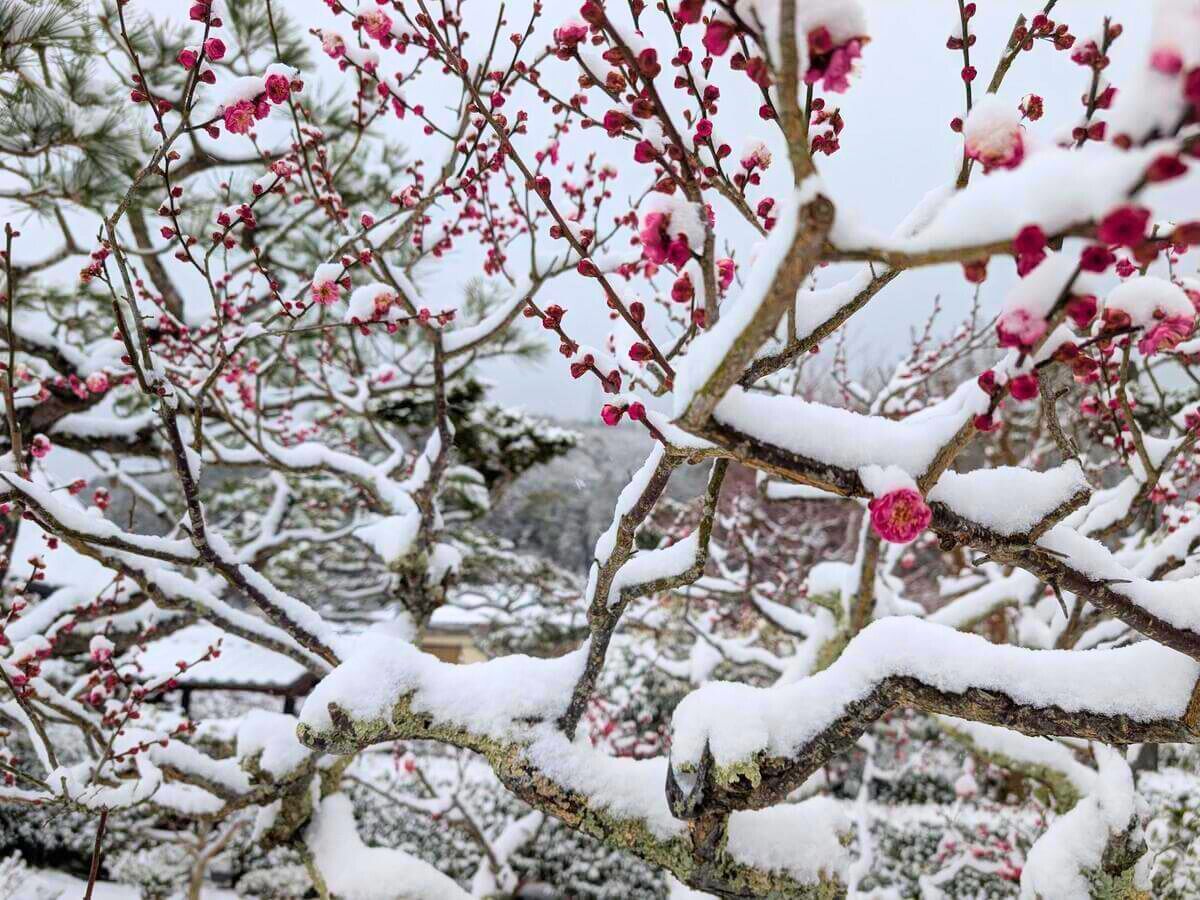
The plum blossom, enduring the harsh cold to bloom, has long been regarded as a symbol of endurance and nobility.
Let’s enjoy the plum blossoms while awaiting spring’s arrival.
As aki previously introduced, famous viewing spots nationwide can be found here: