Shimenawa – A Traditional Japanese Decoration Marking Sacred Places
Category: Tips
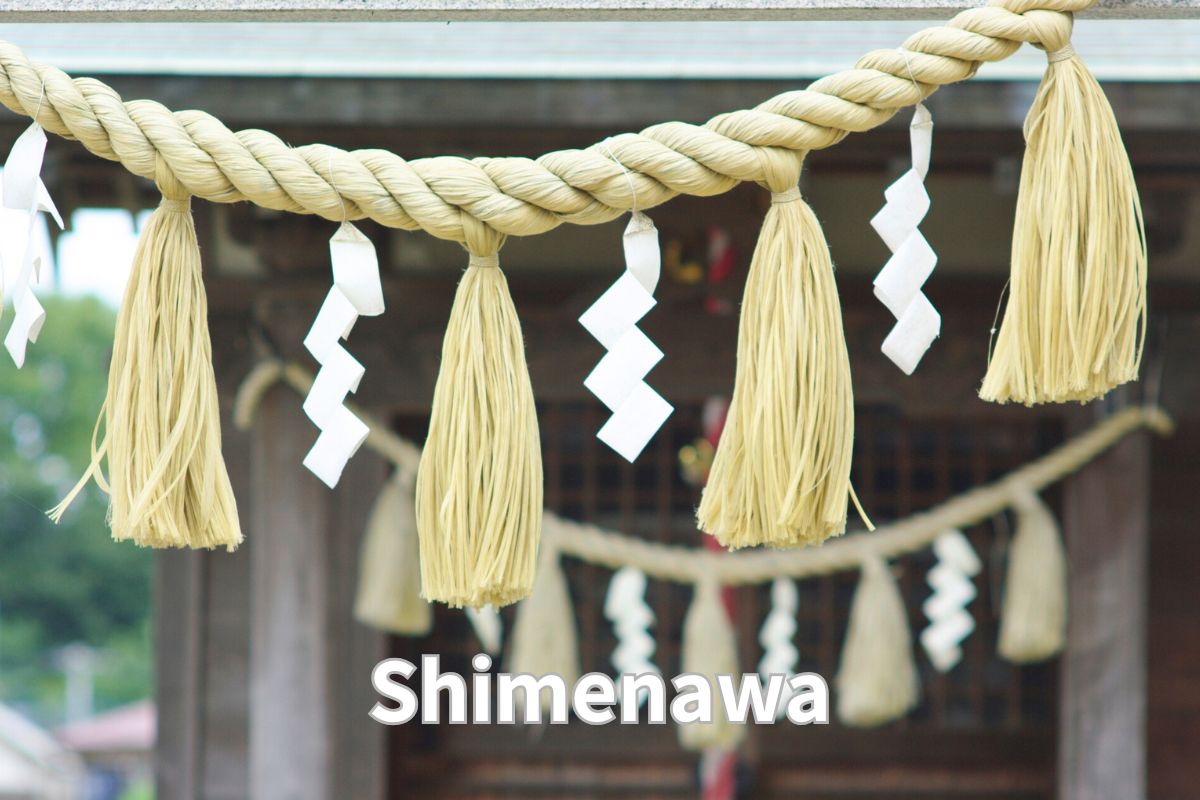
At the Hachimangu Shrine in my village, every year around year-end, volunteers from the parishioners gather to make shimenawa (sacred ropes.)
This year, as the caretaker of Hachimangu, I also participated and learned the basics from the elders.
At Japanese shrines, shimenawa ropes are hung beneath the eaves of the main buildings. The one at the Kagura-den hall of Izumo Taisha in Shimane Prefecture is particularly famous for being Japan’s largest, with a maximum diameter of 8 meters and weighing 4 to 5 tons.
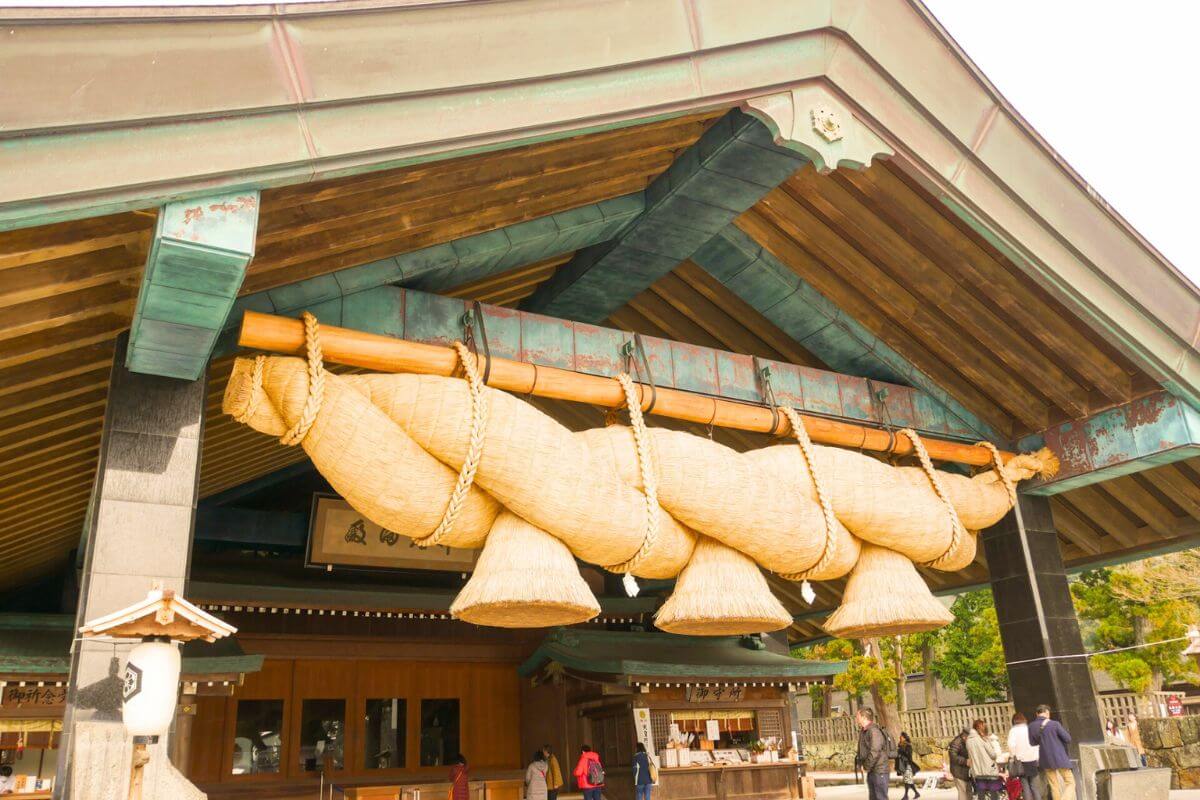
▲The Shimenawa at the Kagura-den Hall of Izumo Taisha
The shimenawa rope at shrines marks the boundary (kekkai) separating the domain of the gods from the domain of humans. It also serves to keep malevolent entities and defiled spirits from approaching the gods. That is why it is displayed year-round. While similar religious boundaries exist worldwide, those woven from rice straw appear to be unique to Japan.
Meanwhile, ordinary homes also decorate their entrances and alcoves with shimenawa. This is specifically to welcome the deity of the new year (Toshitokushin) and is only done during the New Year period.
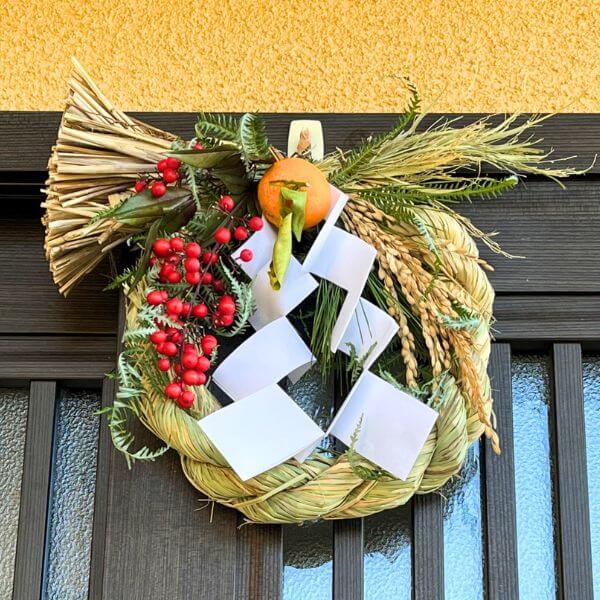
▲New Year’s shimenawa decoration
My late father, born in 1928, made his own shimenawa every year. I watched him make them when I was in elementary school, but I’d completely forgotten how. The basic method is the same for both household and shrine versions, though their sizes differ.
While regular rice straw works, glutinous rice straw is considered best for shimenawa. Its longer strands and sticky texture make it less prone to breaking, easier to work with, and give it a tighter, more resilient finish.
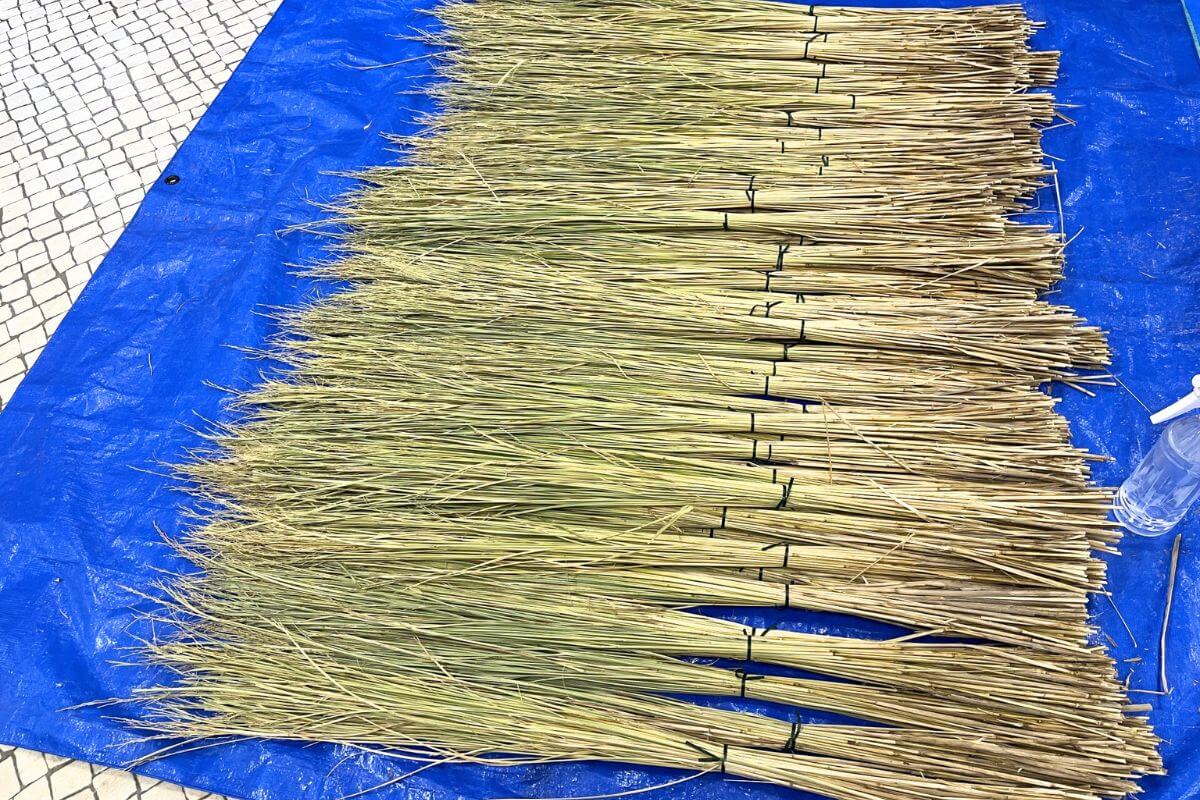
▲Glutinous rice straw
First, take a handful of straw and comb it with a Warasuguri (straw comb) to remove any unwanted husks or beards. This cleans the stems. Moisten it with water, then pound it evenly with a wooden mallet to soften it. Divide this bundle of straw into three parts and tie the ends together with hemp rope or similar.
Twist two of these bundles clockwise while winding them together. Wrap the remaining bundle along the twisted pair of ropes to complete the three-strand rope.
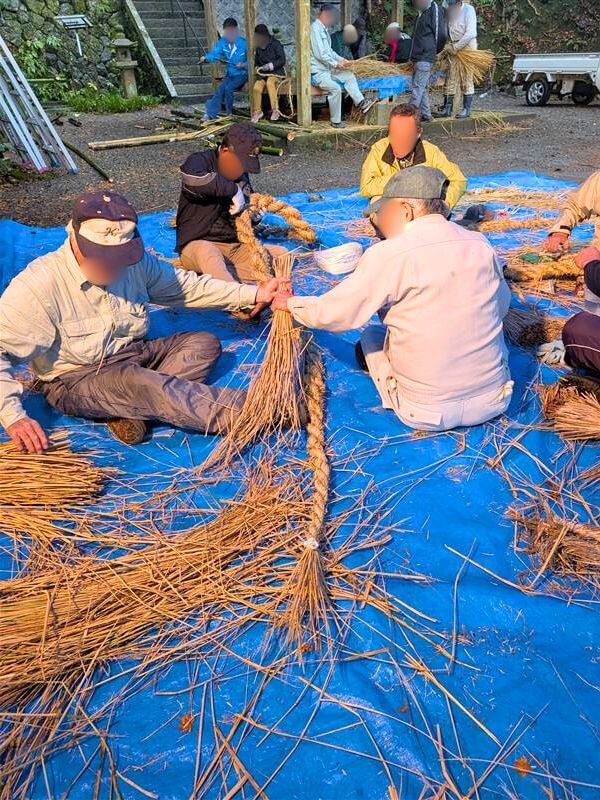
▲Making Shimenawa at Hachimangu Shrine
When the straw runs low, add a new bundle and twist it together to extend the length. If this joining is done poorly, weak, thin spots will form in the sacred rope. The elders skillfully weave it, gripping the bundle between their big toe and index toe.
This is the basic method for making thin sacred ropes by one person. For thicker ropes, larger bundles are used, requiring strength, so several people work together, calling out to each other.
In Japan, you can see scenes similar to this work on television. Yes, in Japan’s traditional culture, when a Yokozuna (the highest rank in sumo wrestling) is born, they perform a similar task, braiding a rope using hemp. It looks just like the shimenawa ropes at shrines, doesn’t it?
Once the shimenawa is braided, paper streamers cut into lightning-like shapes (shide) are attached, completing it. Thicker shimenawa ropes sometimes also have tassels made from straw hanging from them.
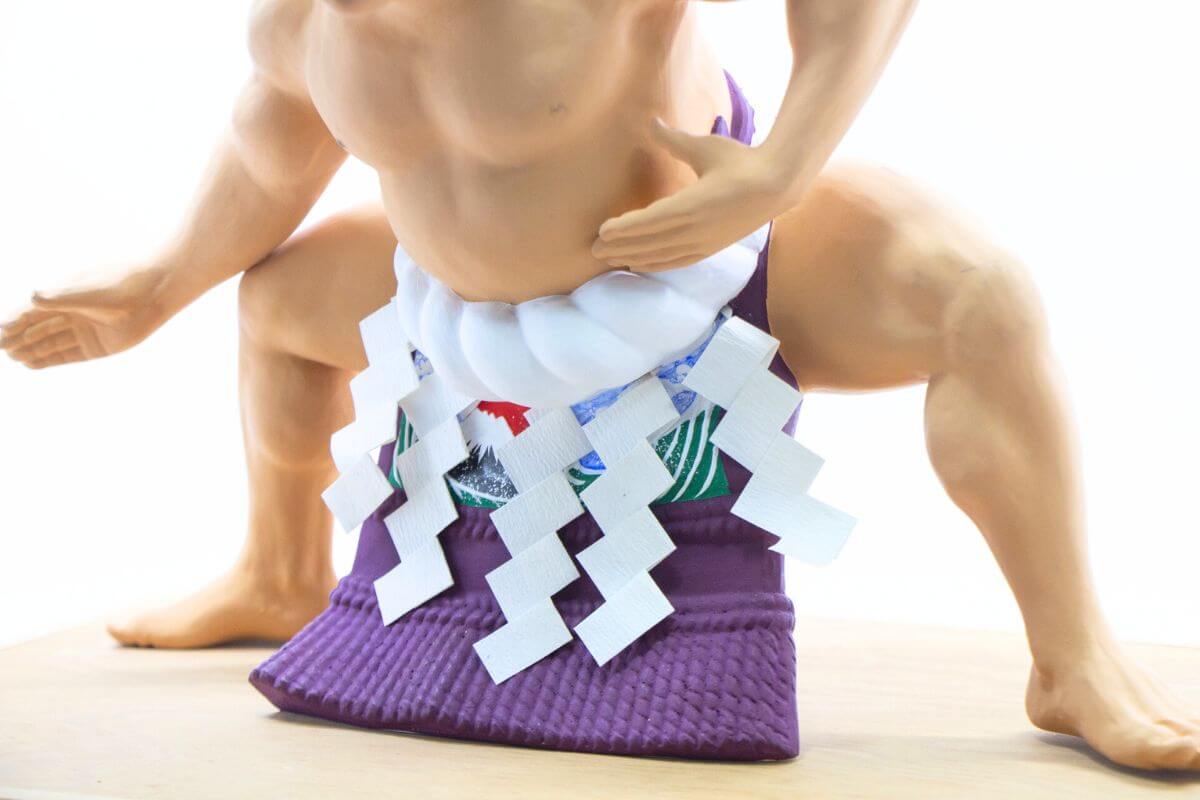
▲The image of the rope worn by a yokozuna
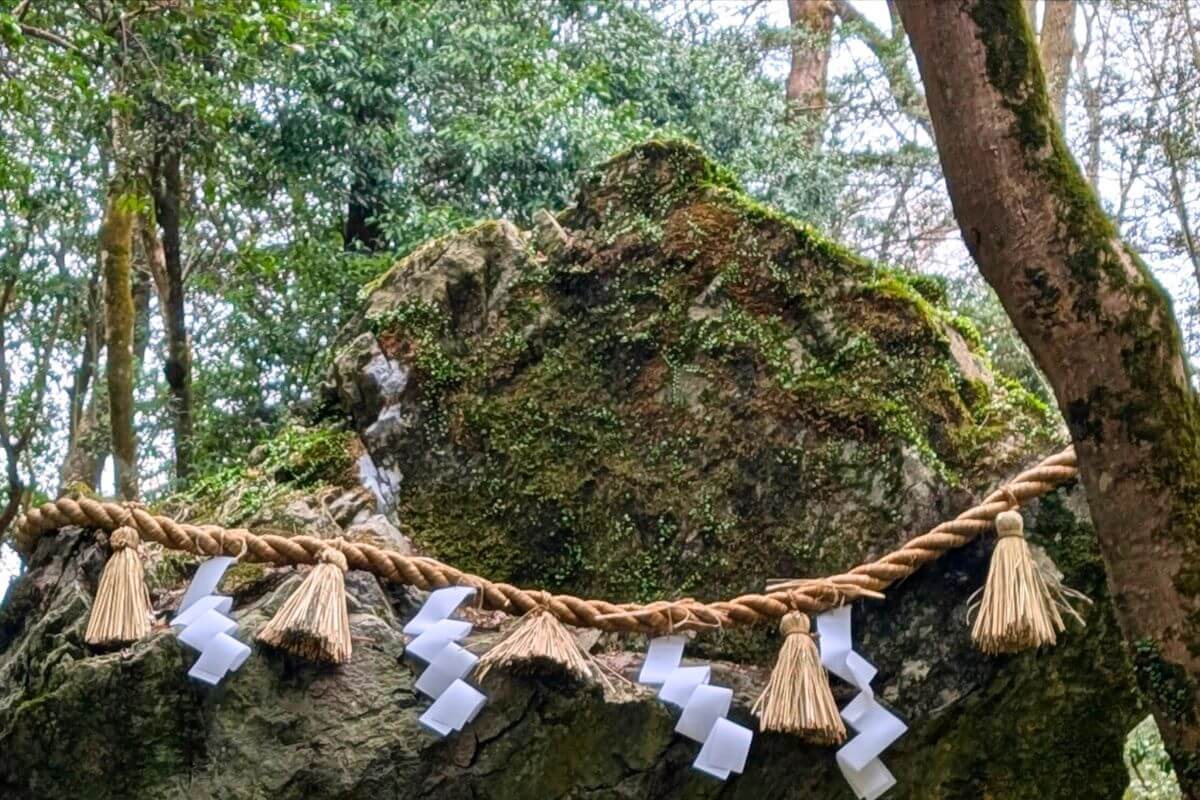
▲Shimenawa stretched across the giant stone
Japan, a nation with a long history of rice cultivation, has traditionally used straw to make various items after the harvest, such as straw sandals called “waraji” for winter work and bales for storing rice and charcoal. Straw has also been used to thatch house roofs.
Even in food, the famous fermented dish “Natto” has traditionally been fermented inside straw. As rice cultivation became mechanized and sickle harvesting faded, straw was automatically chopped and spread across the fields. Therefore, if one wishes to use straw for anything now, it must be deliberately set aside by drying it on Hasagi (drying rice stalks.)
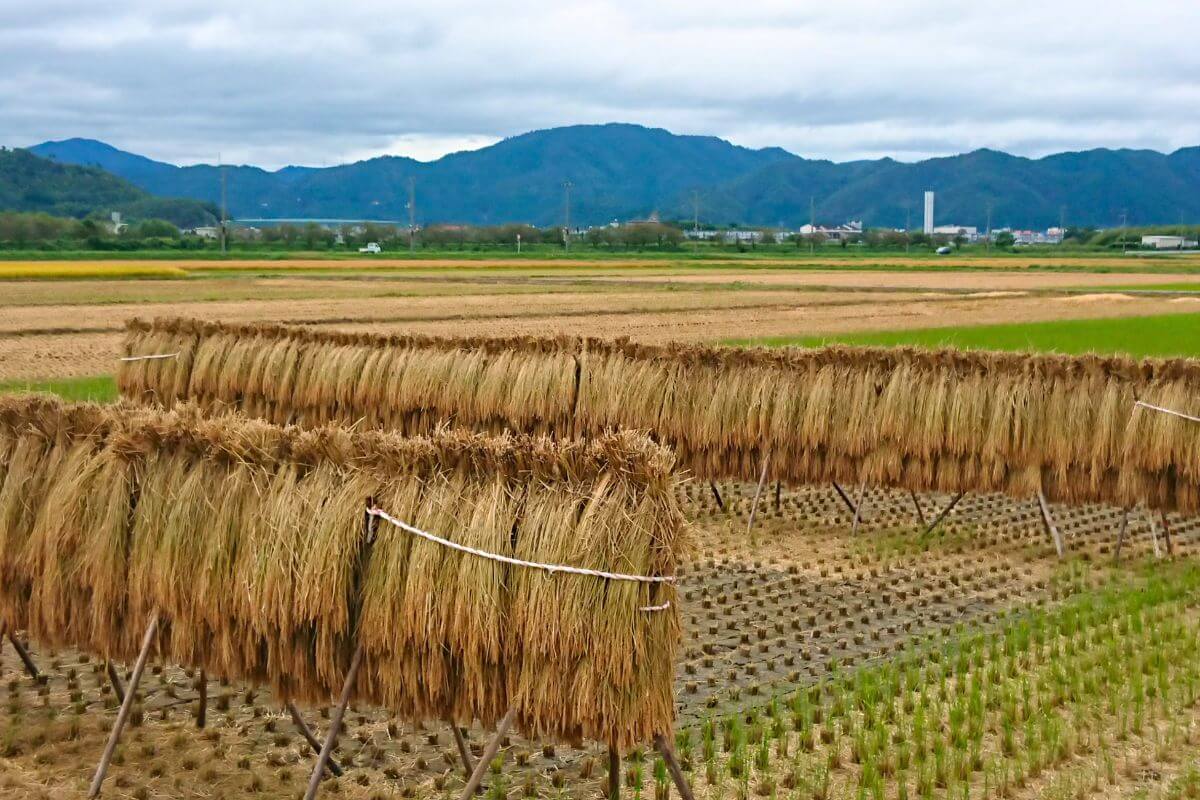
▲Storing straw on Hasagi (drying rice stalks)
Next time you visit a shrine, take a moment to observe the shimenawa. A symbol of Japan’s rice-farming culture lives on there even today.
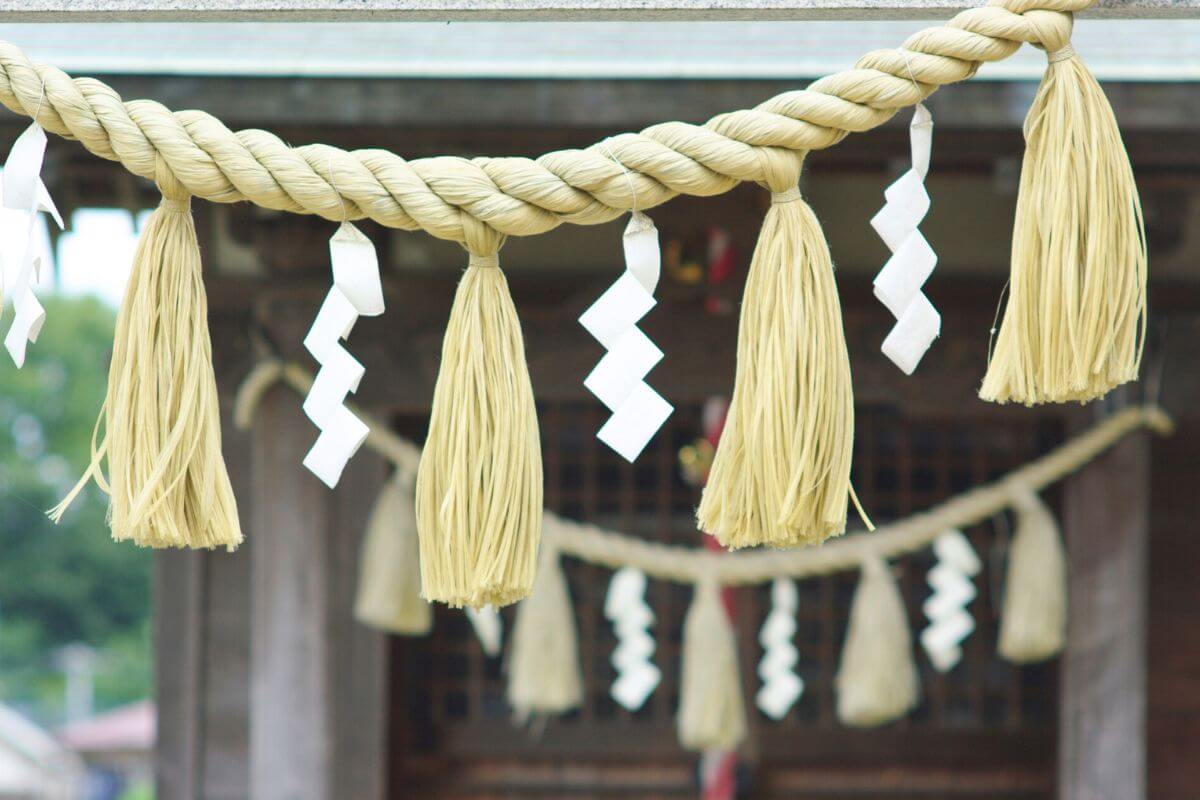
If you want to see a giant shimenawa rope, head to Izumo Taisha Shrine. Check out this article.