Discovering the Charm of Japanese Tea Beyond Matcha. Ujitawara Seichajyo Chokubaibu “Cha o Hiraku”
Category: Food&Drink
Located in Ujitawara Town, Kyoto—known as the birthplace of Japanese green tea—is the 100-year-old tea shop “Ujitawara Seichajyo.” Its direct sales shop, the Ujitawara Seichajyo Chokubaibu “Cha o Hiraku,” is attracting attention not just as a place to buy tea, but as an experiential shop that proposes new ways to enjoy Japanese tea.
Japan boasts a rich and diverse tea culture, including matcha, which is popular even overseas. In this article, we’ll introduce “Cha o Hiraku” as a spot where you can discover the charms of Japanese tea beyond matcha.
The Appeal of Japanese Tea Goes Beyond Just Matcha
In recent years, against the backdrop of growing health consciousness and the popularity of Japanese cuisine, “matcha” has been gaining popularity around the world. I imagine many foreign visitors to Japan look forward to enjoying matcha lattes and matcha desserts.
On the other hand, matcha isn’t the only type of tea that Japanese people drink on a daily basis. In reality, opportunities to drink matcha are mainly limited to tea ceremony experiences and cafes, while in everyday life, people tend to enjoy sencha, hojicha, and genmaicha.
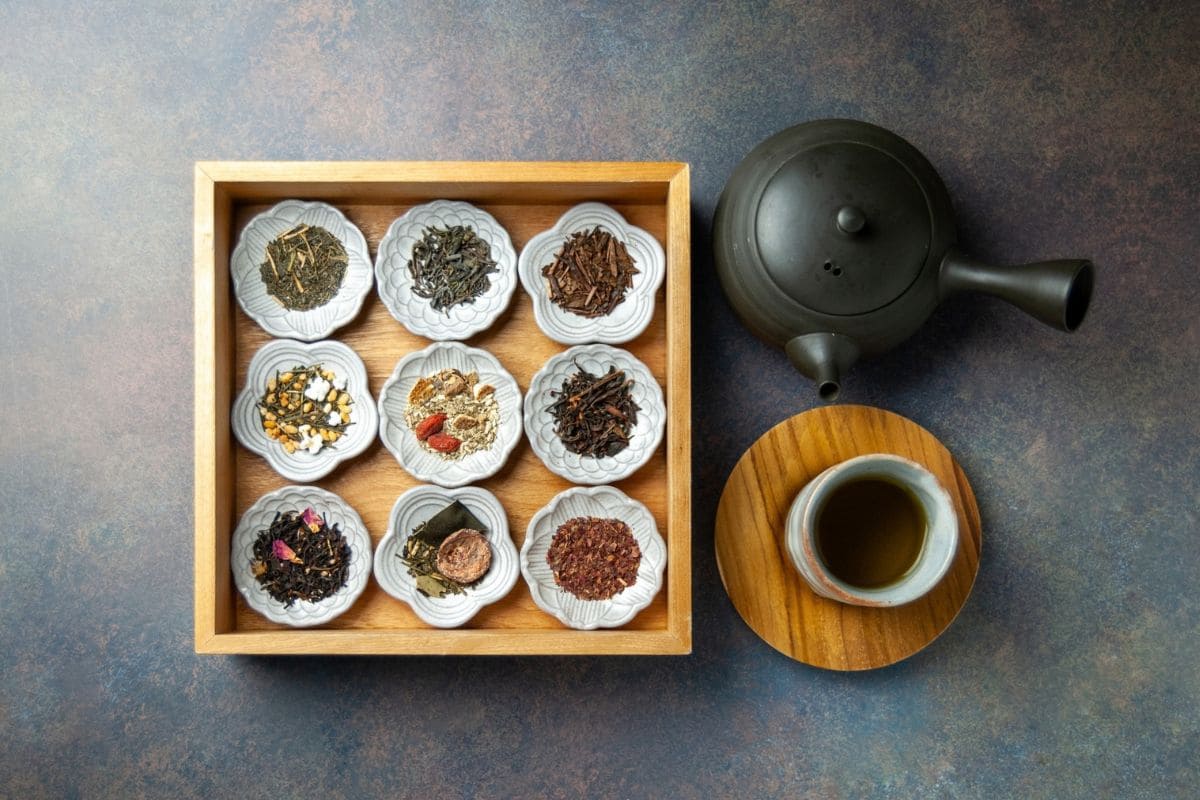
Not only do these teas differ in aroma and flavor, but they are also enjoyed in a variety of settings. Whether it’s tea enjoyed with a meal, tea savored during a relaxing break, or tea chosen to match the season, a diverse tea culture is deeply rooted in Japanese daily life.
“I’m familiar with matcha, but I’d like to try other Japanese teas as well.” For people like this, we recommend the Ujitawara Seichajyo Chokubaibu “Cha o Hiraku.” Here, you can explore the rich world of Japanese tea—which goes far beyond matcha—and discover a cup that suits your taste.
What is “Cha o Hiraku” at the Ujitawara Seichajyo Chokubaibu?
Located in the southeastern part of Kyoto Prefecture, Ujitawara Town is known as the “birthplace of tea,” with deep ties to the history of Japanese tea. In fact, it is said that “green tea”—a beverage so familiar to the Japanese people—was first created in Ujitawara Town.
The Ujitawara Seichajyo Chokubaibu, which has been selling tea in Ujitawara Town for 100 years, opened its direct sales shop, “Cha o Hiraku,” driven by a desire to “help more people discover the charm of Japanese tea.” The shop is located on the first floor of “KYOTO TOWER SANDO,” the commercial area of Kyoto Tower, right in front of Kyoto Station.
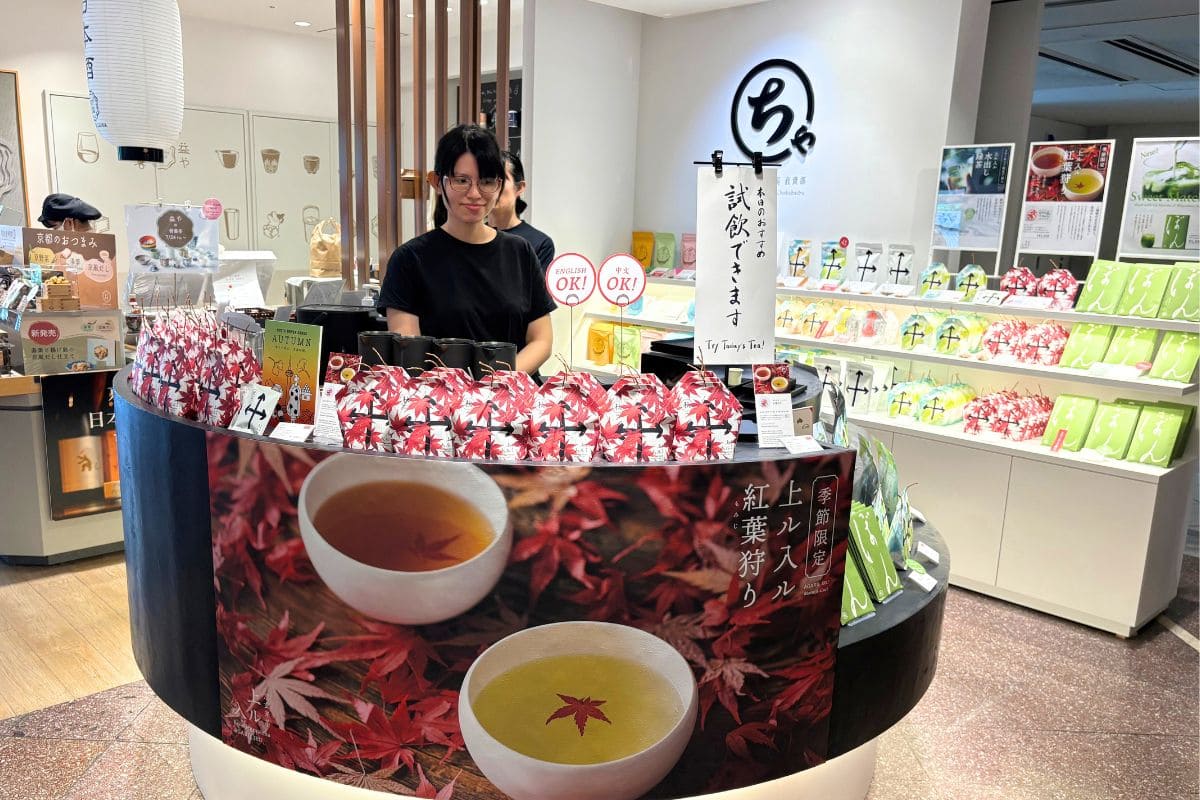
The shop’s name embodies the idea of opening the door to new encounters with tea, unlocking tea’s potential, and discovering new ways to enjoy tea.
We highly recommend this shop as a place where you can fully experience the charm of Japanese tea—not just matcha.
Experiential shop with tasting
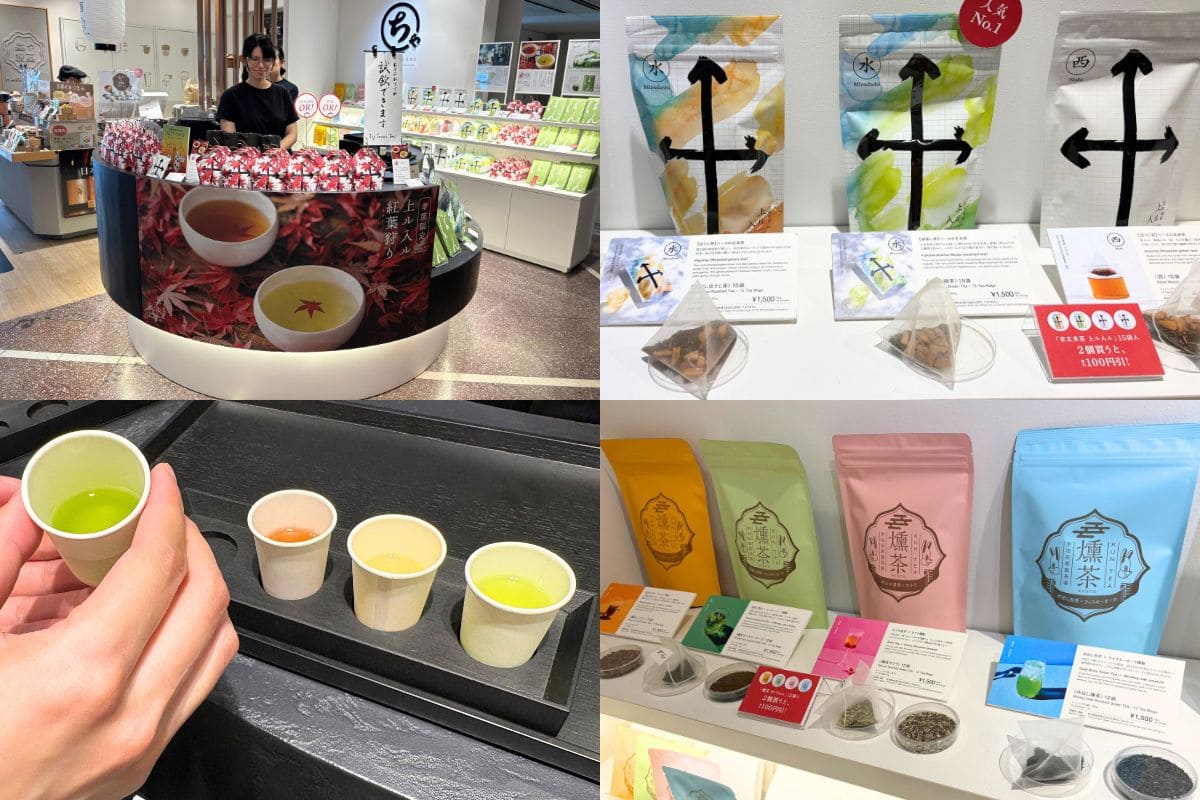
At the counter bar inside “Cha o Hiraku,” you can sample 3 to 4 types of tea for free each season and enjoy comparing their flavors. For those trying Japanese tea for the first time or those who are unsure which tea to buy, this is a great service that lets you taste the teas in a relaxed atmosphere.
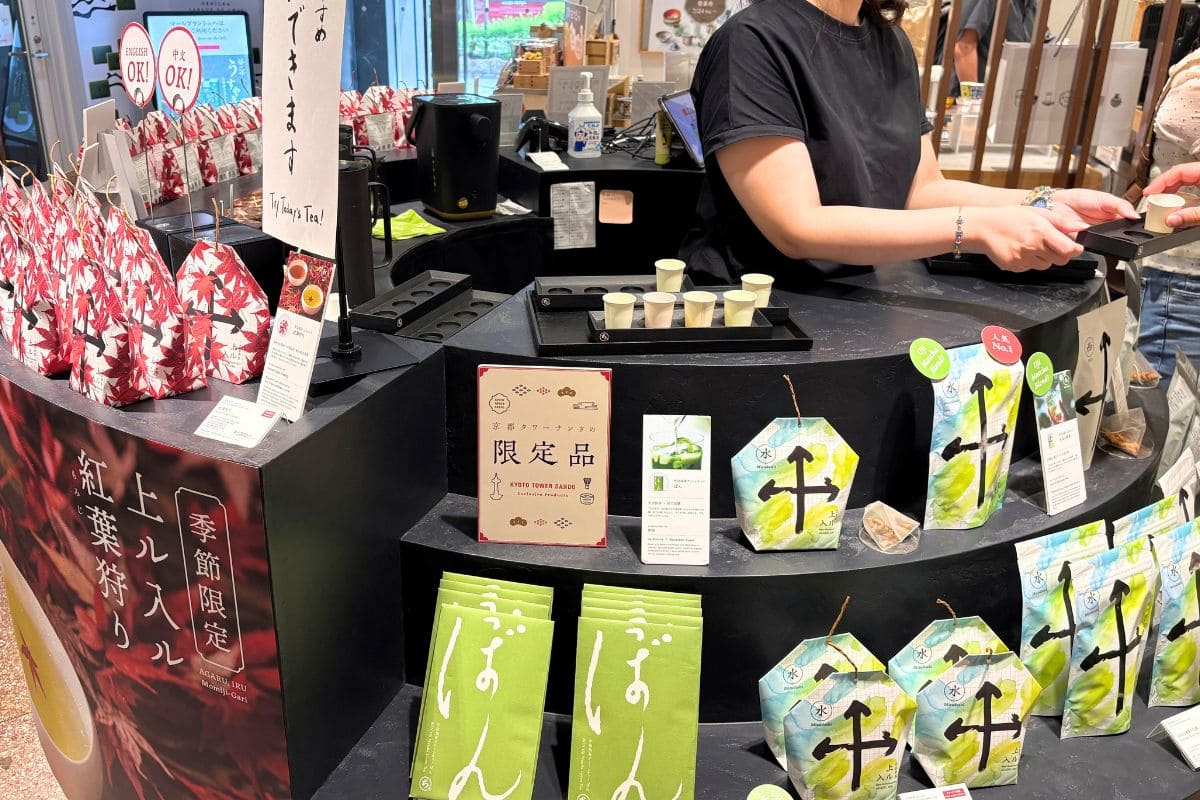
As you can see from the signs that say “ENGLISH OK!” and “中文 OK!”, the staff can assist you in English, Chinese (simplified and traditional), and other languages, so you can enjoy the experience with peace of mind.
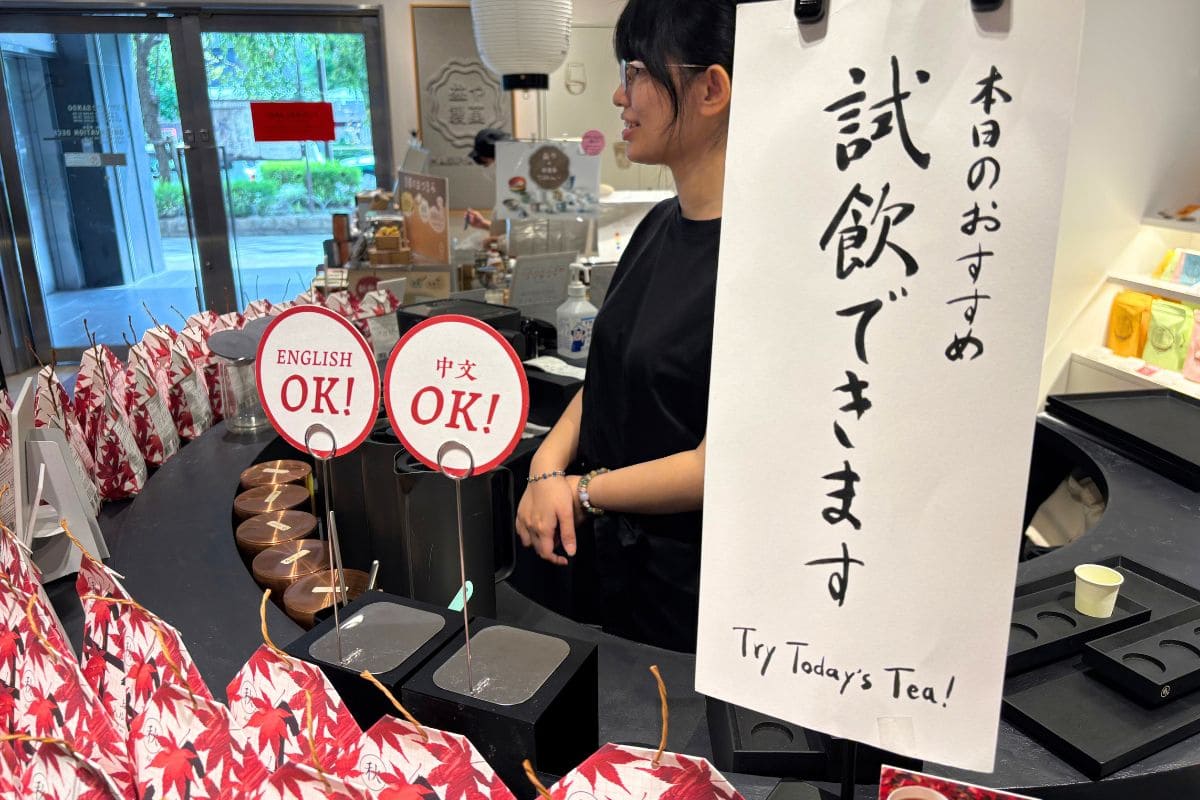
In addition, the design of this circular counter is inspired by the “haikenba” (tea cupping room), where the quality of tea—its color, aroma, and flavor—is assessed. Since a black finish makes it easier to check the condition of the tea, a matte black finish has been used for both the counter and the serving trays.
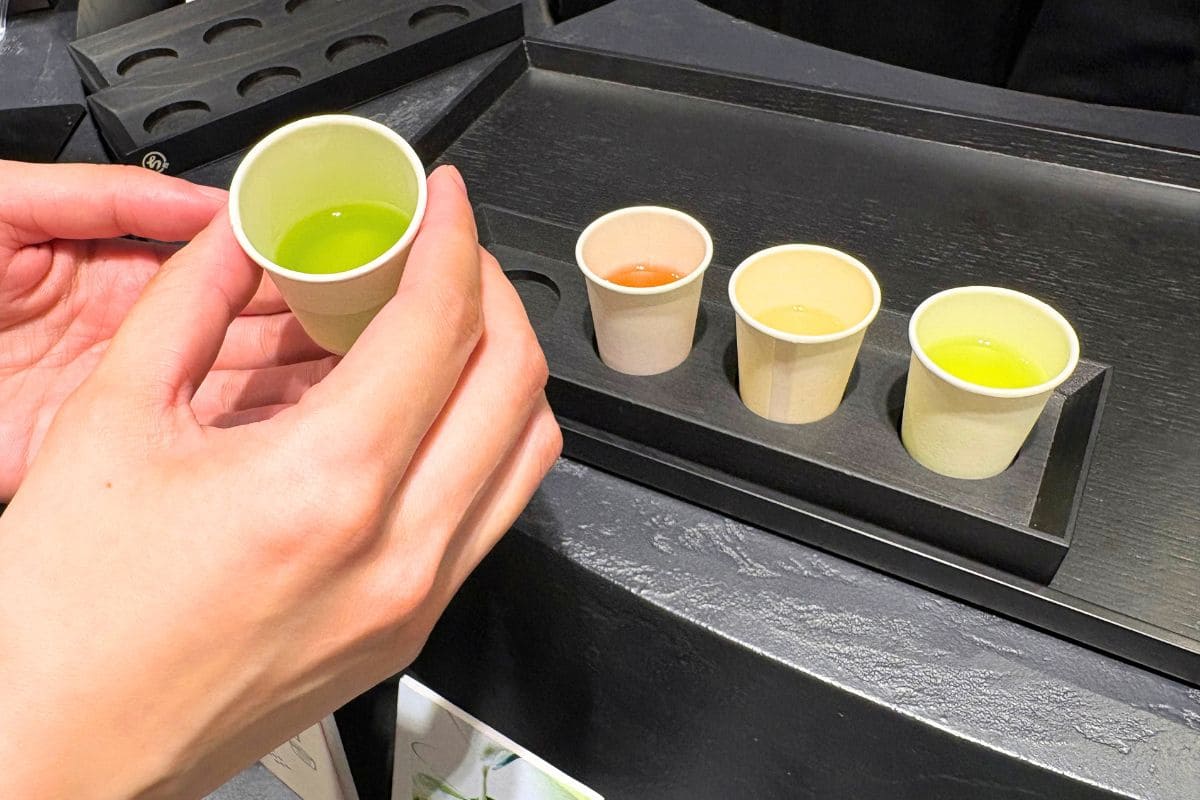
When you actually have the tea poured for you, you can clearly see the differences in the hues of each tea. In the authentic atmosphere unique to a specialty tea shop, you can take your time savoring the flavors of the tea and discover the one that suits your taste.
Recommended Teas
From the many varieties of Japanese tea available, here are three that left a particularly strong impression on me. Since each has its own unique flavor and aroma, I encourage you to try them side by side and find your favorite.
Kyo-Genmaicha Agaru Iru
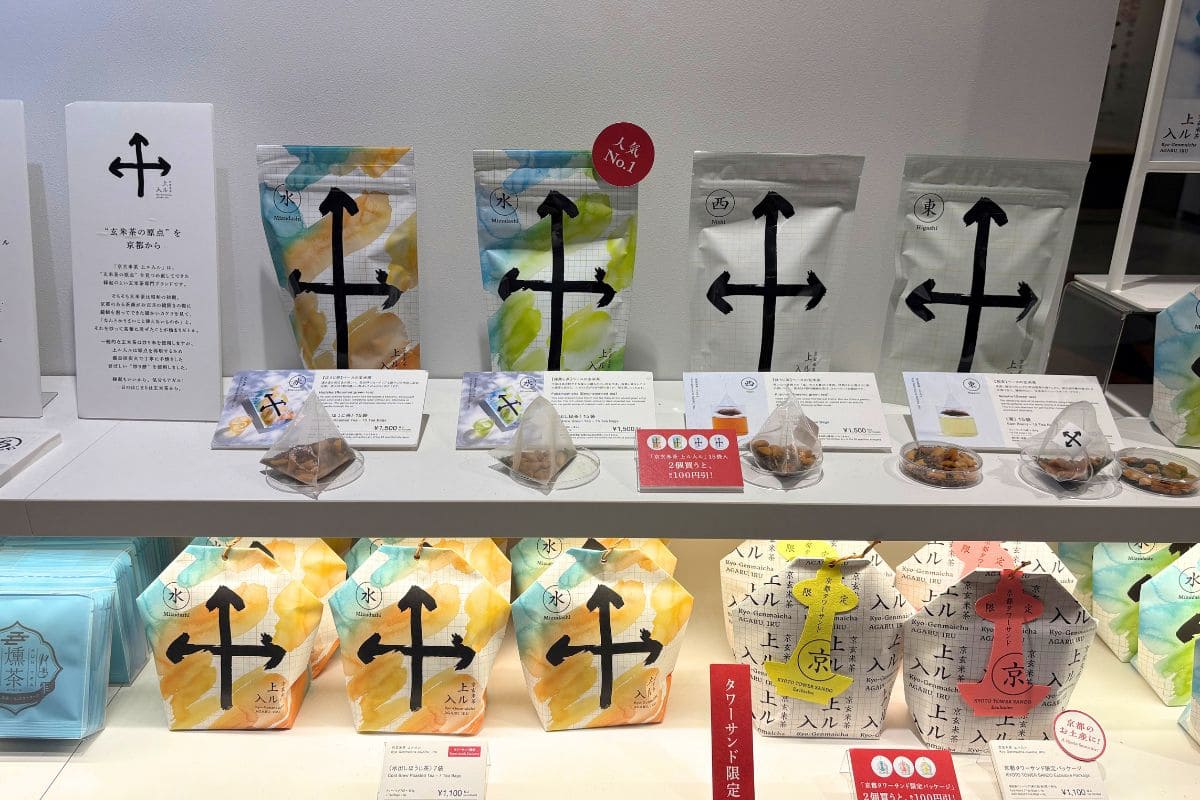
The first recommendation is “Kyo-Genmaicha Agaru Iru.”
While genmaicha is typically made by blending green tea leaves with roasted rice, this genmaicha uses rice cakes roasted over a binchotan charcoal fire instead of roasted rice. The reason for this is that genmaicha is said to have originated from roasting pieces of the New Year’s kagami mochi and mixing them into tea.
Therefore, “Kyo-Genmaicha Agaru Iru” stays true to the roasted mochi—which can be considered the origin of genmaicha—allowing you to enjoy a toasty flavor that complements the tea’s aroma.
“Kyo-Genmaicha Agaru Iru” offers a variety of products.
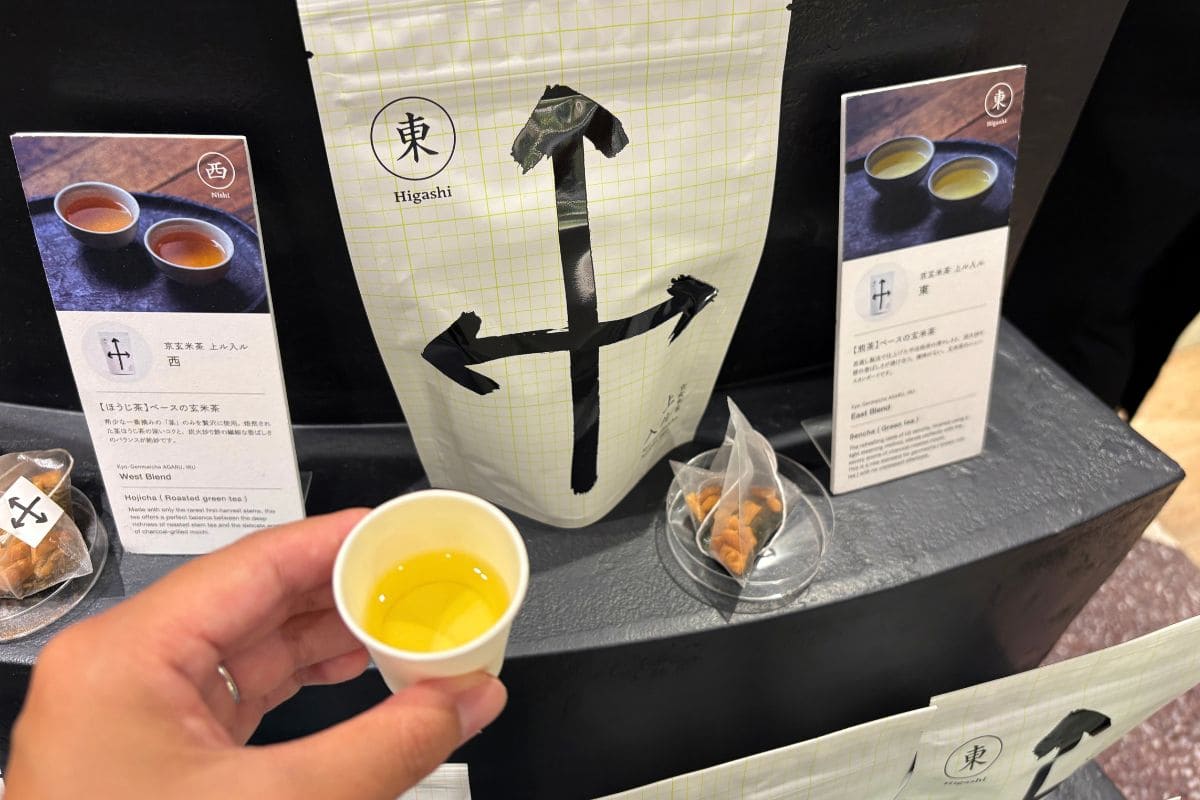
“Kyo-Genmaicha Agaru Iru [Higashi (East)]” is a genmaicha blend made by combining Uji sencha with rice cakes roasted over a binchotan charcoal fire.
The Uji sencha used in this blend is primarily sourced from the Ujitawara area, the birthplace of green tea. Its clear, light green color, refreshing taste free of any off-flavors, and invigorating aroma pair perfectly with the gentle, toasty fragrance of the roasted rice cakes.
With its refreshing color and aroma reminiscent of the dawn sky, it’s the perfect cup to enjoy before setting out to explore Kyoto.
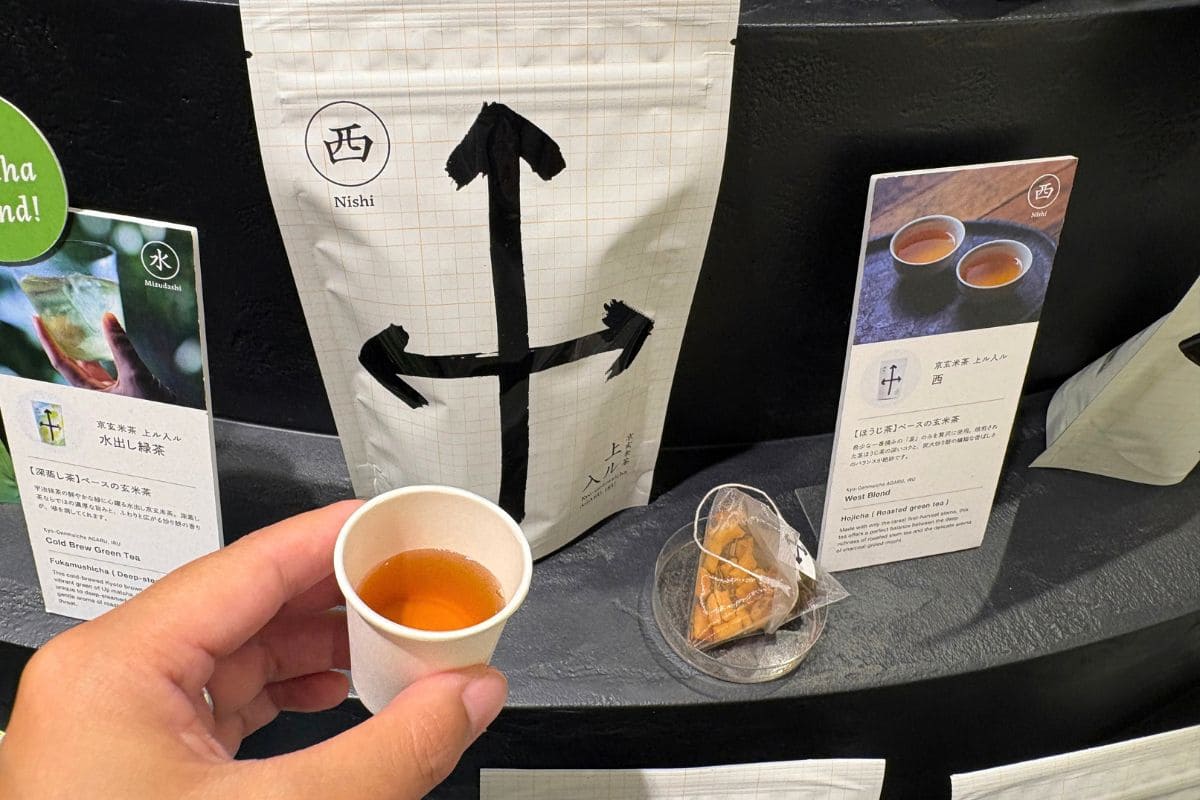
“Kyo-Genmaicha Agaru Iru [Nishi (West)]” is a tea blend of stem hojicha and roasted rice cakes.
Made exclusively from the stems of tencha—the raw material used to make matcha—it is characterized by its refined aroma and beautiful amber color.
Its warm hues, reminiscent of a sunset, and its mellow, toasty aroma make it perfect for the end of the day. It’s the kind of cup you’ll want to savor at your hotel after enjoying a stroll through the streets of Kyoto.
While the “Higashi(East)” [Sencha-based Genmaicha] and “Nishi (West)” [Hojicha-based Genmaicha] varieties are typically brewed with hot water, cold-brew versions are also available.
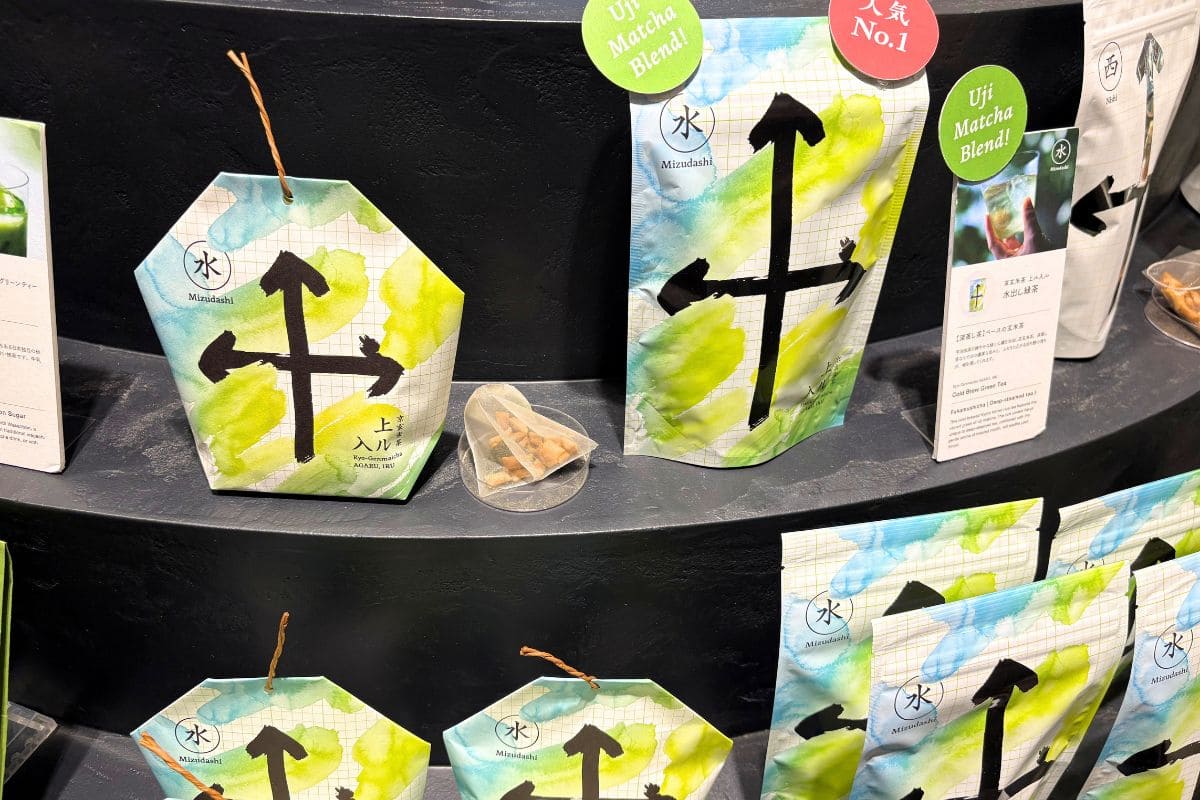
“Kyo-Genmaicha Agaru Iru [Mizudashi Ryokucha (Cold-Brew Green Tea)]” is a popular tea enjoyed year-round. It’s made by blending Uji matcha and roasted mochi with a deep-steamed tea base that easily releases its rich umami flavor even when cold-brewed.
While cold-brewed teas often take several hours to steep, this one turns a vibrant green almost immediately, allowing you to enjoy the refreshing taste of green tea combined with the toasty aroma of roasted mochi. It’s recommended for anyone who wants an easy way to enjoy cold tea.
In addition to its standard lineup, the brand also offers seasonal limited-edition products.
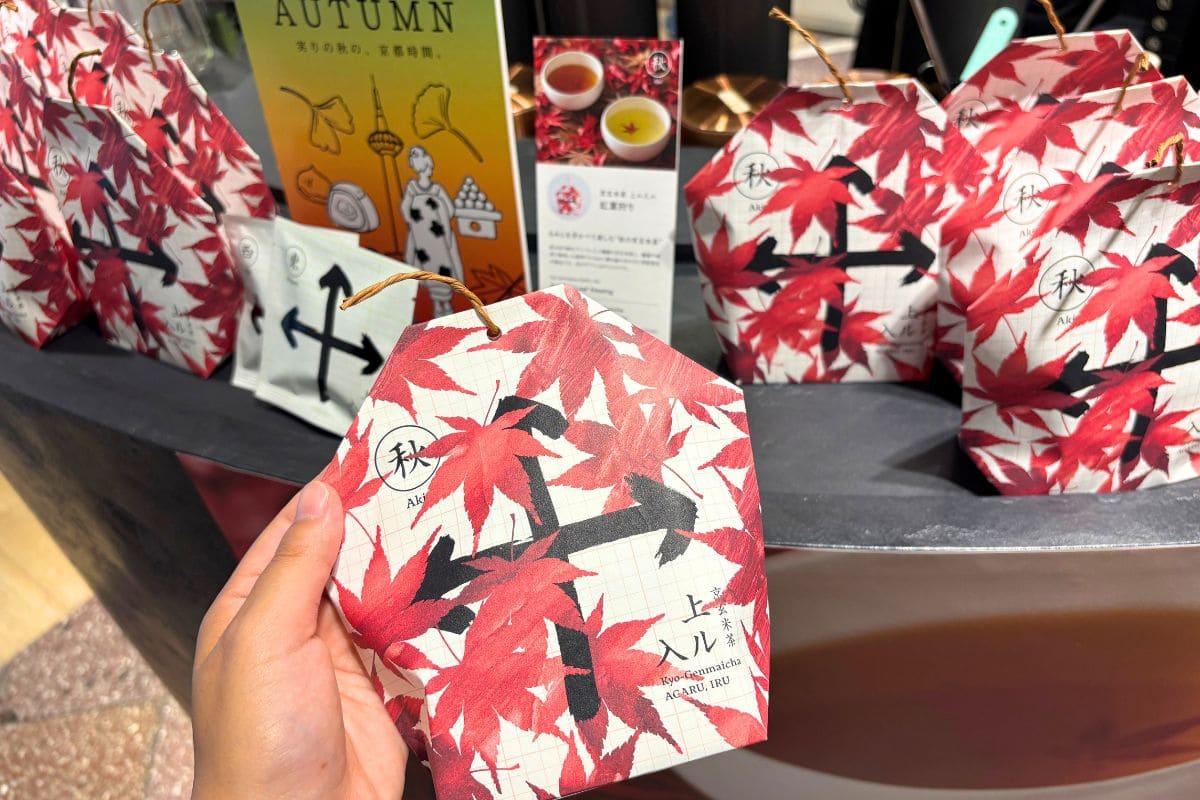
Since I visited in September—the Autumn season—the “Kyo-Genmaicha Agaru Iru [Momiji Gari (Autumn Leaf Viewing)]” was available.
The packaging, featuring autumn foliage that evokes the image of fall in Kyoto, is absolutely lovely. In addition to two varieties of genmaicha, it contains edible maple leaves. It’s a unique product where you can float the maple leaves on top of the tea and eat them right out of the cup.
After enjoying the autumn foliage while sightseeing in Kyoto this fall, why not sip some “Kyo-Genmaicha Agaru Iru [Momiji Gari]” and reminisce about your memories?
BON [Uji Matcha Green Tea]
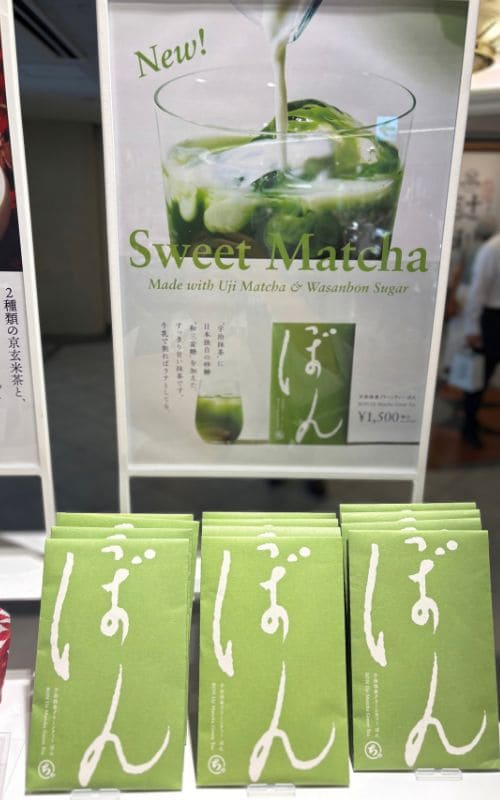
Next, we’d like to introduce the new product, “BON [Uji Matcha Green Tea].”
When people hear the term “green tea,” many think of “Ryokucha,” but in Kyoto, it has long been a beloved local drink—a sweet beverage made by adding sugar to matcha.
“BON” is a matcha drink that combines Uji matcha with Wasanbon sugar, a traditional Japanese sugar. You can enjoy its gentle sweetness and the refreshing flavor of matcha.
Since it comes in powder form, it’s a breeze to prepare—just dissolve it in cold water. Plus, you can easily enjoy an authentic matcha latte by mixing it with milk.
Matcha is taking the world by storm. We invite you to try “BON” as a new way to enjoy this popular beverage.
KUNTea
Finally, we’d like to introduce “KUNTea,” a craft tea born from the unprecedented concept of combining Japanese tea with smoking.
“KUNTea” is characterized by its rich aroma and deep, complex flavor, achieved by smoking carefully selected Japanese teas. By infusing each tea leaf with a smoking aroma tailored to its specific variety, the tea retains its natural umami while developing a distinctive flavor profile.
It pairs exceptionally well with cheese, nuts, and snacks served with alcohol, and is highly recommended as a new concept non-alcoholic beverage that allows you to enjoy pairing tea with food.
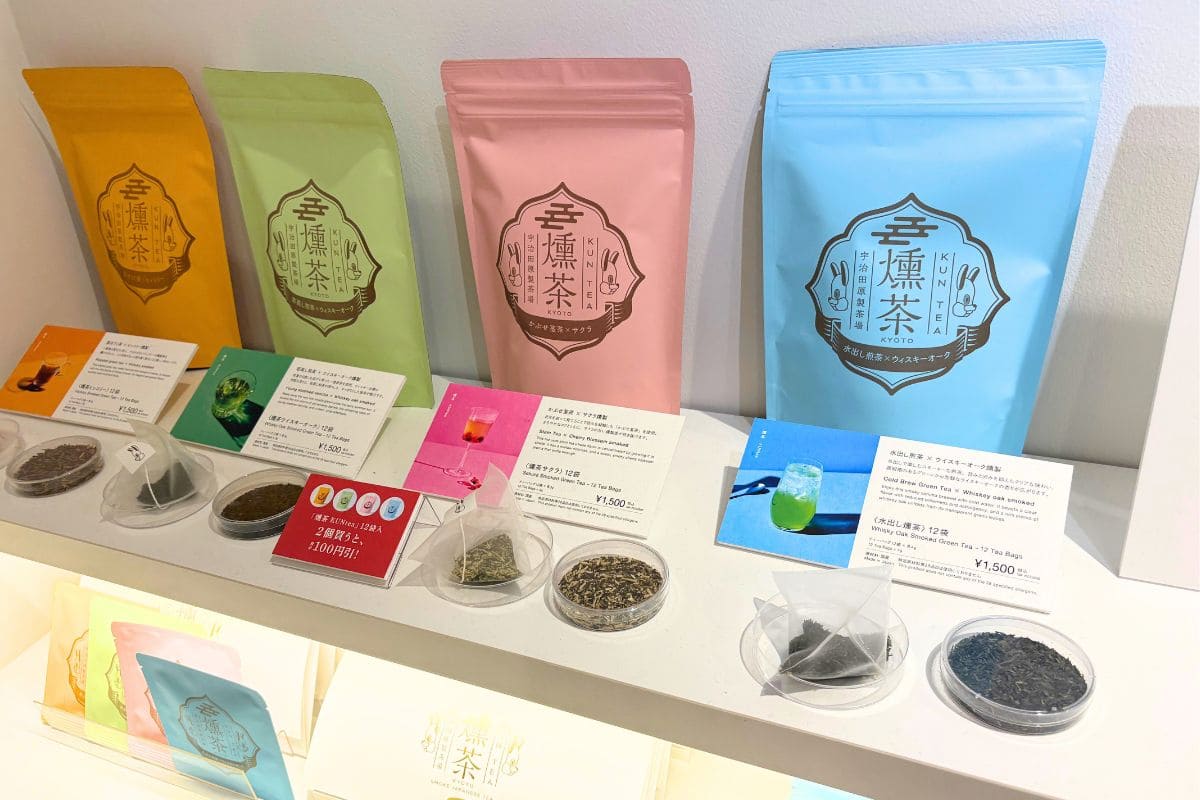
[Features of the 4 Varieties (Introduced in order from the right side of the image above)]
Cold-Brew KUNTea… A KUNTea made by infusing cold-brewed sencha—with tea leaves finely chopped to enhance extraction—with the smoky aroma of whiskey oak. It features a clean, savory flavor with subdued bitterness and astringency; when mixed with sparkling water, it offers a taste reminiscent of a non-alcoholic highball.
KUNTea Sakura… A KUNTea made by infusing kabuse-style stem tea—known for its mellow richness—with the subtly sweet, smoky aroma of cherry blossoms. Adding dried fruit enhances its floral flavor.
KUNTea Whiskey Oak… A KUNTea featuring a young, lightly steamed sencha with a refreshing flavor, infused with the smoky aroma of whiskey oak. Brew it a bit stronger and mix it 1:1 with sparkling water to enjoy it as a non-alcoholic tea soda.
KUNTea Hickory… KUNTea features an elegant, toasty stem hojicha infused with the mild, smoky aroma of hickory. It’s delicious hot, of course, but we also recommend mixing it with milk.
“KUNTea” is a new concept craft tea that fuses Japan’s traditional tea culture with smoking techniques. We invite you to experience its unique aroma and flavor for yourself.
Why not bring home a new Japanese tea that’s full of Kyoto charm as a souvenir?
While Kyoto is famous for traditional Japanese teas such as matcha and sencha, the teas featured here are all unique products that bring fresh ideas and new ways to enjoy tea to Kyoto’s tea culture.
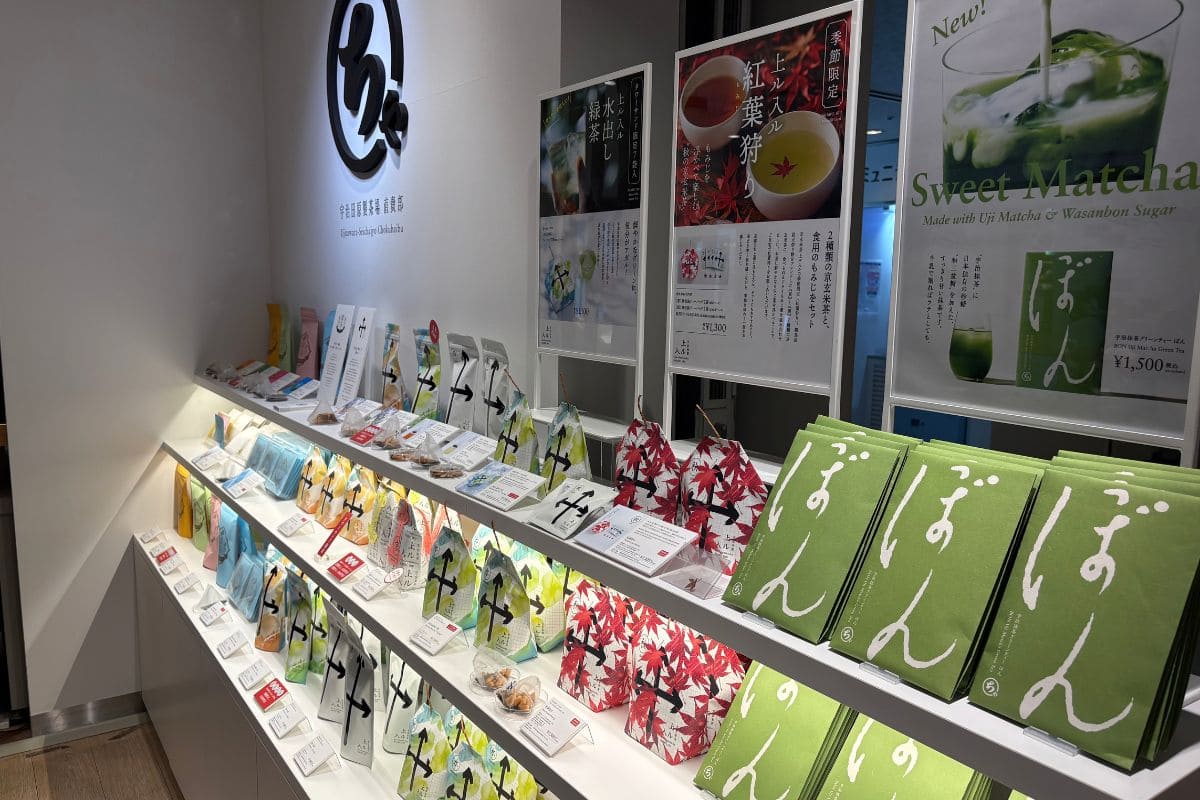
“Kyo-Genmaicha Agaru Iru,” an auspicious tea that recreates the origins of genmaicha; “BON,” a cold, sweet Uji matcha green tea; and “KUNTea,” a new concept craft tea that fuses Japanese tea with smoked flavors. Each of these special brews—born from the creativity of the Ujitawara Tea Factory, which has been crafting tea for many years—is packed with the meticulous attention to detail and artisanal skill unique to Kyoto.
They’re perfect not only as souvenirs to commemorate your trip to Kyoto or as gifts for loved ones, but also for anyone who wants to discover the new charms of Japanese tea at home. Be sure to stop by the store to sample a variety of teas, take your favorite one home, and experience a whole new world of tea from Kyoto.
Store Details
Store Name: Ujitawara Seichajyo Chokubaibu “Cha o Hiraku”
Address: 721-1 Higashishiokoji-cho, Karasuma-dori, Shichijo-sagaru, Shimogyo-ku, Kyoto 600-8216, Kyoto Tower Sando 1F
Hours: 10:00 AM – 9:00 PM
Phone: 075-344-2020
Official Website: https://ujt-chokubaibu.com/
Official Instagram: https://www.instagram.com/cha.o.hiraku/